The Complete Guide to Direct Mail Marketing for Moving Companies in 2026
Everything you need to know about running profitable direct mail campaigns as a moving company. Targeting, design, timing, and measurement.
Matty Mailers
January 20, 2026
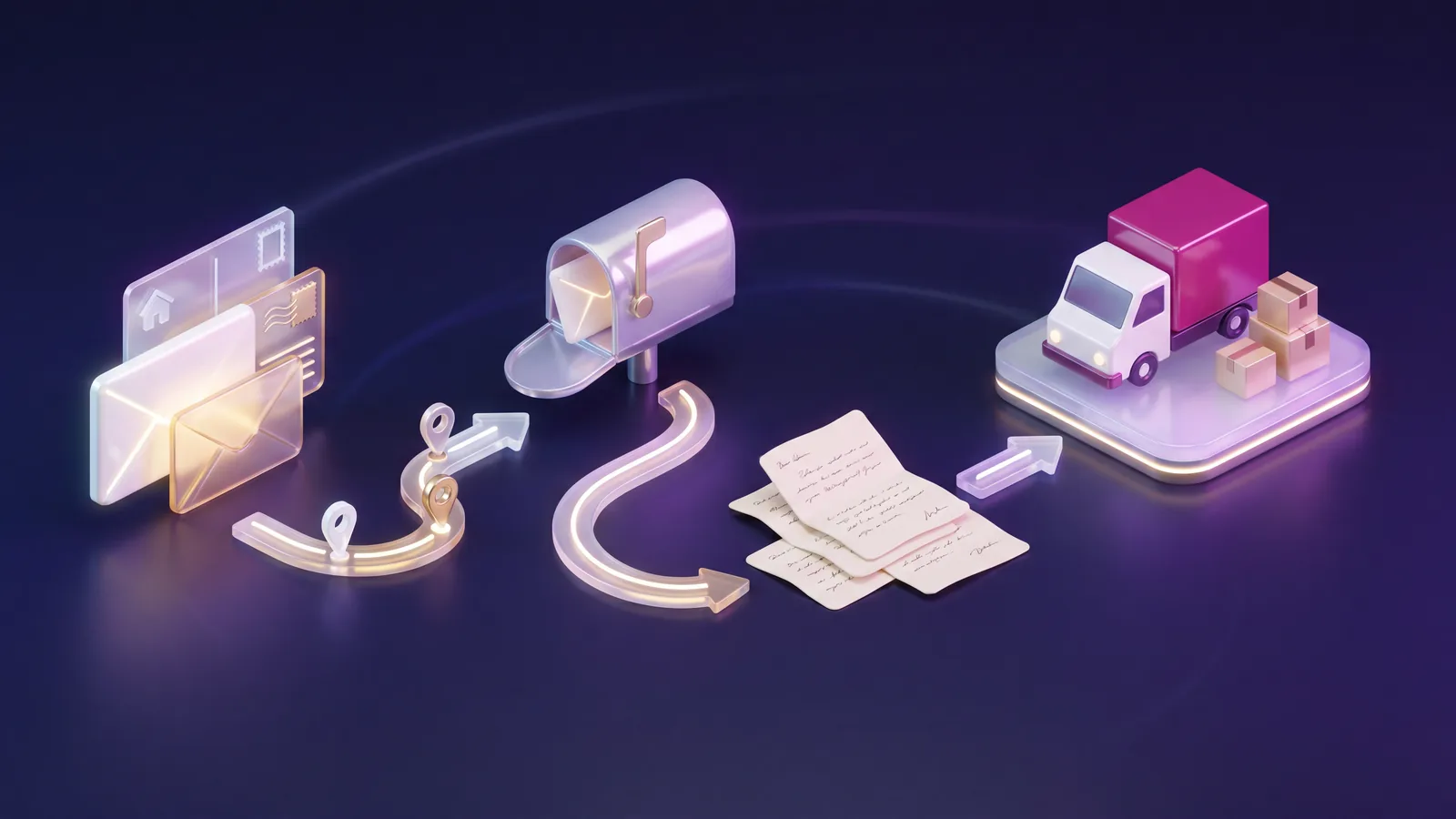
Direct mail isn't dead. For moving companies, it's one of the highest-ROI marketing channels available — if you do it right. This guide covers everything you need to know about running profitable direct mail campaigns in 2026.
Why Direct Mail Works for Movers
Moving is a physical, local service. It makes sense that a physical, local marketing channel works well. But there's a deeper reason direct mail outperforms digital for movers: timing and targeting.
When you mail a postcard to someone who just listed their home, you're reaching them at the exact moment they need your service. They're not searching yet. They're not comparing quotes yet. You're the first mover to show up — literally in their mailbox. That first-mover advantage is worth its weight in gold.
Response rates vary by list, offer, timing, format, and follow-up. The right comparison is your cost per booked move by channel, measured with the same attribution rules.
Choosing Your Format
Handwritten Letters
Handwritten-style letters can create a more personal attention moment than a generic mailpiece. Research from the USPS Office of Inspector General and Temple University found that physical ads were reviewed longer and remembered better than digital ads in the study, but campaign results still depend on execution.
Best for: high-value markets, establishing a premium brand, targeting luxury homes or long-distance moves.
Postcards (4x6 or 6x9)
The workhorse of direct mail. Full-color, double-sided, with no envelope to open. Postcards are cost-effective and immediately visible. The recipient sees your message without having to do anything.
Best for: high volume campaigns, local awareness, competitive markets where you want maximum reach.
5x7 Cards
A middle ground between postcards and letters. Slightly more premium feel than a standard postcard, but more cost-effective than a full letter. Good for standing out in the mailbox.
Targeting: The Most Important Decision
Your targeting determines everything. The best design in the world won't save a campaign sent to the wrong people.
New Listings (Best)
Homeowners who just put their home on the market have signaled a possible transition. A listing does not guarantee a move or mean the household has not already hired help, but it can create an earlier outreach window.
Pending Sales
Homes that have gone under contract. The timeline varies by transaction, but these households may be actively planning a move.
Radius Targeting
Targeting everyone within a radius of your business. Lower intent than listing-based targeting, but useful for brand awareness and capturing people who are thinking about moving but haven't listed yet.
What NOT to Target
Recently sold homes. By the time a home sells, the homeowner has often already hired a mover or is days from moving. You're too late.
Timing Your Campaigns
Speed matters. The faster your postcard reaches a new listing, the more likely you are to be the first mover they hear from. Ideally, mail should go out within 24-48 hours of a new listing appearing.
This is nearly impossible to do manually. It requires a system that monitors new listings daily and triggers mail automatically. That's exactly what we built at MovingLetters.ai — and it's why our clients consistently outperform movers using manual processes.
Designing Effective Mail Pieces
Keep it simple. One clear message. One clear call to action. Don't try to say everything on a single postcard.
Make it relevant. Use personalization only where your data rights permit it, and connect the message to a real need. Personalization is not a universal performance multiplier.
Include a clear CTA. Phone number, website, QR code — make it obvious how to reach you. Don't make them search for it.
Show social proof. A short testimonial, star rating, or "trusted by 500+ families" builds credibility instantly.
Brand it. Your colors, your logo, your voice. Make it unmistakably yours so they recognize you when they see your truck.
Measuring Results
Track everything. Use unique phone numbers or landing pages for each campaign so you know exactly which mail pieces are driving calls. Track:
- Response rate: Calls or web visits divided by pieces mailed
- Cost per lead: Total campaign cost divided by leads generated
- Cost per acquisition: Total cost divided by booked moves
- Revenue per piece: Total revenue from campaign divided by pieces mailed
- ROI: Revenue divided by cost
Common Mistakes to Avoid
Mailing once and quitting. Direct mail is a consistency game. One mailing won't transform your business. Commit to at least 3-6 months of consistent campaigns to see real results.
Using stale data. Old lists = returned mail = wasted money. Use a data source that refreshes daily.
Skipping address hygiene. USPS says NCOALink helps mailers update lists before mailing and reduce undeliverable mail. Use an appropriate licensed provider and pair the result with current source data.
Competing on price. Don't lead with "cheapest movers in town." Lead with trust, professionalism, and the personal touch. Price shoppers are the worst customers.
The Bottom Line
Direct mail works for moving companies in 2026 because the fundamentals haven't changed: people still check their mail, people still respond to personal outreach, and people still need movers. What has changed is the technology behind it. Automated targeting, daily data, NCOA validation, and robotic handwriting have made direct mail more effective and more efficient than ever.
If you're not using direct mail as part of your marketing mix, you're leaving money on the table. And if you're doing it manually, you're leaving even more.